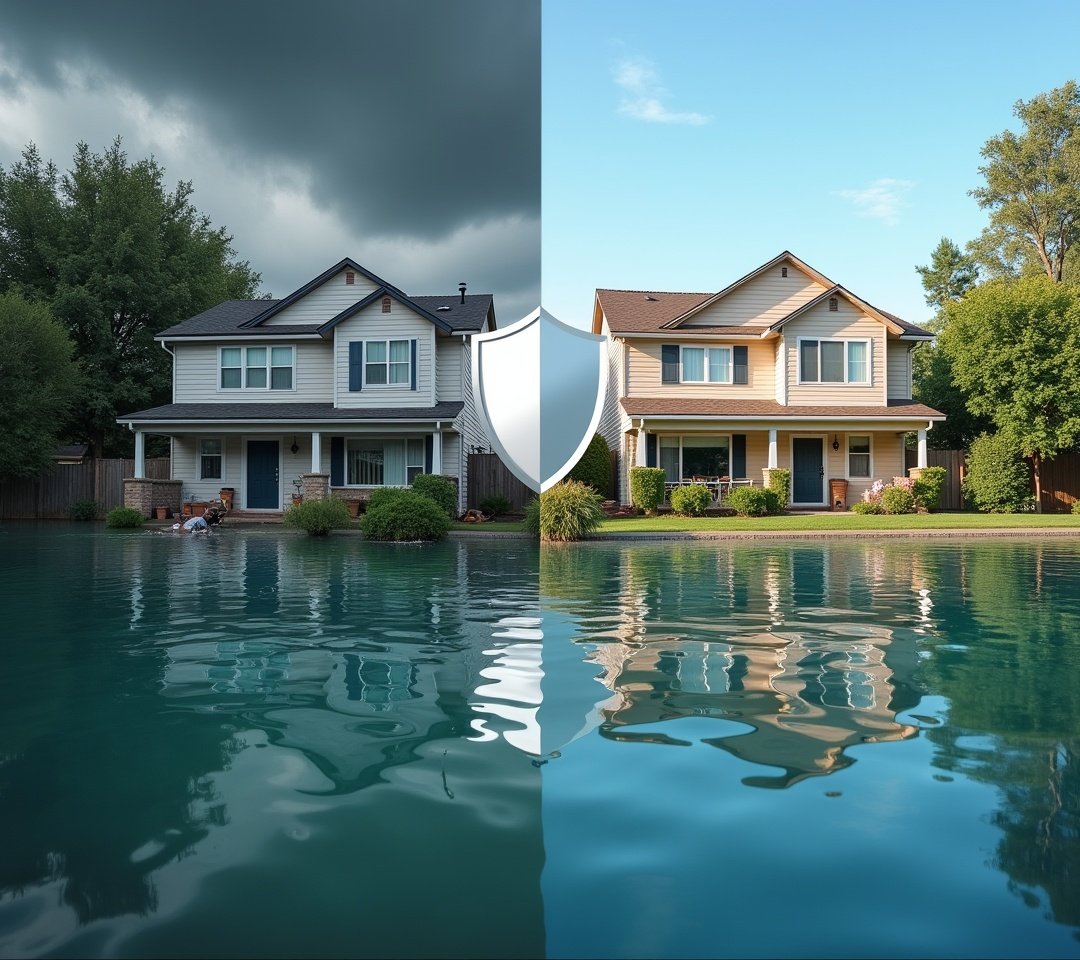
Flood Insurance vs Home Insurance: What I Wish Someone Had Told Me Before Water Ruined My Basement
Here’s a stat that still blows my mind — according to FEMA, just one inch of floodwater can cause up to $25,000 in damage to your home. One inch! And here’s the kicker: most standard homeowners insurance policies won’t cover a single penny of it.
I learned this the hard way back in 2019 when a heavy rainstorm overwhelmed the drainage system in my neighborhood. Water crept into my basement, destroyed my furnace, and ruined about half of what we had stored down there. I called my insurance company feeling pretty confident I was covered. Spoiler alert: I was not.
So let me walk you through everything I’ve learned since then about flood insurance vs home insurance, because honestly, the difference between these two could save you thousands of dollars and a whole lot of heartache.
What Does Standard Homeowners Insurance Actually Cover?
Your typical home insurance policy — the one most of us get when we buy a house — covers a lot of stuff. We’re talking fire, theft, vandalism, windstorm damage, and even liability if someone slips on your icy porch. It’s a solid safety net for everyday risks.
But here’s where people get tripped up. Homeowners insurance generally covers water damage that comes from inside your home, like a burst pipe or an overflowing washing machine. The moment that water comes from outside — rising rivers, storm surge, heavy rainfall pooling around your foundation — that’s a whole different ballgame.
Most standard policies from companies like State Farm or Allstate explicitly exclude flood damage. I remember reading through my policy after my basement disaster and finding the exclusion buried on like page 47. It was right there in black and white, and I had just never bothered to look.
So What Exactly Is Flood Insurance?
Flood insurance is a separate policy designed specifically to cover damage caused by flooding. In the U.S., most flood insurance policies are backed by the National Flood Insurance Program (NFIP), which is managed by FEMA. You can also find private flood insurance options these days, and honestly some of them offer better coverage.
A standard NFIP policy covers up to $250,000 for building damage and $100,000 for personal property. That might sound like a lot, but if you’ve got a nicer home or expensive belongings, it can run out quick. Private insurers sometimes offer higher limits, which is worth looking into.
One thing that really frustrated me when I finally bought flood coverage was the 30-day waiting period. You can’t just buy a policy when you see a hurricane on the weather map and expect to be covered tomorrow. Plan ahead, people. Trust me on this one.
Key Differences You Need to Know
Let me break down the main differences because this is where it really matters:
- Cause of damage: Home insurance covers internal water damage, fire, theft, and liability. Flood insurance covers rising water from external sources like storms, overflowing rivers, and storm surge.
- Who provides it: Home insurance comes from private companies. Flood insurance is often through the NFIP, though private options exist.
- Cost: The average homeowners policy runs about $1,800 per year according to Bankrate. Flood insurance averages around $700-$800 annually through the NFIP, but it varies wildly based on your flood zone.
- Required or optional: Your mortgage lender will require homeowners insurance. Flood insurance is only mandatory if you’re in a high-risk flood zone with a federally backed mortgage.
Do You Actually Need Both?
Short answer? Probably yes. About 25% of all flood claims come from areas considered low-to-moderate risk. So even if you don’t live next to a river, flooding can still happen to you. It happened to me in a neighborhood nobody would have called “flood-prone.”
Having both policies means you’re covered whether your kitchen catches fire or a flash flood rolls through your street. Neither policy alone gives you complete protection, and that gap in coverage is exactly where financial disasters happen.
Don’t Make the Same Mistake I Did
Look, I get it — nobody wants to pay for another insurance policy. But after watching my neighbor go through the same thing last year without flood coverage, I can tell you that the cost of not having it is way worse. Review your policies today, check your FEMA flood map, and talk to your agent about what you’re actually protected against.
Your home is probably your biggest investment. Protect it from every angle. And if you want more practical guides like this, head over to Coverage Crafters where we break down insurance topics so they actually make sense. No jargon, no fluff — just stuff you can actually use.
Leave a Reply