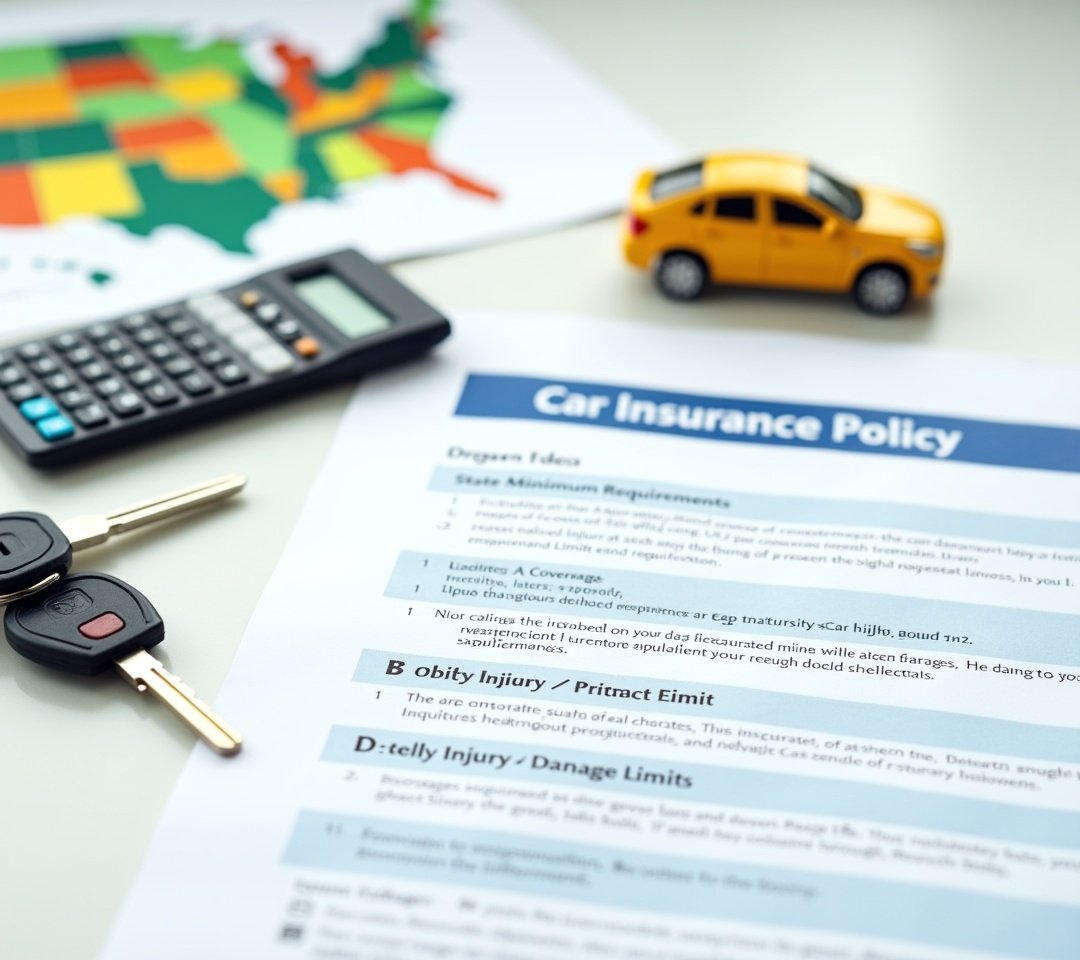
State Minimum Car Insurance Requirements: What I Wish I’d Known Before Getting That Ticket
Here’s a fun stat for you — roughly 1 in 8 drivers in the U.S. is cruising around without any car insurance at all. Wild, right? I’ll be honest, when I first started driving in my early twenties, I barely understood what “state minimum car insurance requirements” even meant. I just picked the cheapest option my agent offered and called it a day.
That was a mistake. And it cost me more than I’d like to admit.
Understanding your state’s minimum auto insurance coverage isn’t just about following the law — it’s about protecting yourself, your passengers, and your wallet. So let me walk you through everything I’ve learned the hard way, so you don’t have to.
What Exactly Are State Minimum Car Insurance Requirements?
Every state (except New Hampshire, which is a whole other story) requires drivers to carry some form of liability car insurance. These minimums set the lowest amount of coverage you can legally have and still drive on public roads. They’re not suggestions — they’re the law.
Most state minimums are broken down into three numbers, like 25/50/25. That first number is the bodily injury liability per person, the second is bodily injury liability per accident, and the third is property damage liability. So in that example, you’d have $25,000 per person, $50,000 per accident for injuries, and $25,000 for property damage.
Sounds straightforward, but trust me — it gets confusing fast. You can check out the Insurance Information Institute’s breakdown for a solid state-by-state overview.
Why I Learned the Hard Way That Minimums Aren’t Always Enough
Back in 2016, I rear-ended someone at a stoplight. Totally my fault — I was messing with the radio like an idiot. The damage to their car was around $18,000, and thankfully my property damage coverage handled most of it. But the driver claimed a neck injury, and suddenly my $25,000 bodily injury limit was looking real thin.
Long story short, I ended up paying about $4,000 out of pocket. It could’ve been way worse. That experience taught me that minimum coverage is exactly that — the bare minimum. It’s not designed to fully protect you in a serious accident.
State-by-State Differences You Should Know About
Here’s where things get a little messy. Every state sets its own minimum liability coverage, and the differences can be huge.
- California requires 15/30/5 — that property damage limit of just $5,000 barely covers a fender bender these days.
- Texas requires 30/60/25, which is a bit more reasonable.
- Florida doesn’t even require bodily injury liability for most drivers — just $10,000 in PIP (personal injury protection) and $10,000 in property damage.
- Michigan has some of the most complex requirements in the country, with unlimited lifetime personal injury benefits being phased into tiered options.
The National Association of Insurance Commissioners has some great resources if you wanna dig deeper into how your state stacks up. Honestly, I was shocked when I found out how low some states set their limits.
Should You Go Beyond the Minimum Coverage?
Short answer? Almost always yes. I know, I know — nobody wants to pay more for car insurance. But here’s the thing. The average cost of a car accident injury claim was over $20,000 according to recent data, and property damage claims averaged around $5,000. If you’re only carrying your state’s minimum auto insurance limits, you could be on the hook for thousands.
After my little fender bender fiasco, I bumped my coverage up to 100/300/100. My premium went up maybe $30 a month. That’s less than what I spend on coffee, and it gives me so much more peace of mind. Collision coverage and uninsured motorist coverage are also worth considering, especially if your car isn’t paid off yet.
Don’t Just Set It and Forget It
Look, I get it — insurance isn’t exactly thrilling dinner conversation. But knowing your state minimum car insurance requirements is one of those adulting things that actually matters. The minimums keep you legal, but they won’t always keep you financially safe.
Take 20 minutes this weekend to review your policy. Compare it against what your state requires and what you’d actually need in a real accident. And if you want more tips on making smart coverage decisions, head over to Coverage Crafters — we’ve got tons of posts that break this stuff down without all the insurance jargon. Your future self will thank you!
Leave a Reply