Blog

  • Life Insurance Riders: A Complete Guide for Beginners

    Life Insurance Riders: A Complete Guide for Beginners

    Life Insurance Riders Guide: The Add-Ons That Can Make or Break Your Policy

    Here’s a stat that honestly blew my mind — nearly 40% of life insurance policyholders don’t even know what riders are available to them. I was one of those people, and it almost cost my family big time. When I first bought my term life policy back in 2016, I just signed on the dotted line and called it a day. No extras, no customization, nothing.

    Then my buddy Dave got diagnosed with a chronic illness. Watching him navigate his finances was a wake-up call. That’s when I dove headfirst into understanding life insurance riders, and let me tell you — these little add-ons are absolute game-changers.

    So What Exactly Are Life Insurance Riders?

    Think of riders as upgrades to your base policy. Your standard life insurance — whether it’s term life or whole life — covers the basics. It pays a death benefit when you pass away. That’s it.

    Riders extend that coverage into areas your base policy simply won’t touch. Some are free, but most come with an additional premium. The key is figuring out which ones actually make sense for your situation, because not every rider is worth the extra cost.

    The Most Common Riders You Should Know About

    Alright, let me break down the heavy hitters. These are the riders I’ve personally researched, asked agents about, and in some cases added to my own policy.

    Accelerated Death Benefit Rider

    This one’s huge. If you’re diagnosed with a terminal illness, this rider lets you access a portion of your death benefit while you’re still alive. Many insurers actually include this one for free, so definitely check if yours does.

    Waiver of Premium Rider

    I added this one after Dave’s situation, no hesitation. If you become disabled and can’t work, this rider waives your premium payments so your policy stays active. It was probably the smartest $8 a month I’ve ever spent.

    Child Term Rider

    Instead of buying a separate policy for each kid, this rider covers all your children under one add-on. It’s usually pretty affordable — we’re talking a few bucks a month. When my daughter was born, this was a no-brainer for me.

    Guaranteed Insurability Rider

    This one’s lowkey brilliant. It lets you increase your coverage at specific life events — marriage, new baby, home purchase — without another medical exam. I wish someone had told me about this when I was 28 and healthy as a horse.

    Long-Term Care Rider

    With the average cost of nursing home care hitting over $90,000 a year, this rider helps cover those expenses by pulling from your death benefit. It’s not perfect, but it’s better than having zero long-term care planning.

    Riders I’d Skip (Unless You Really Need Them)

    Not gonna lie, some riders feel like they’re designed to pad the insurance company’s pockets. The accidental death benefit rider, for instance, sounds great on paper — double payout if you die in an accident. But statistically, most deaths aren’t accidental, so you’re paying extra for something that probably won’t kick in.

    The return of premium rider is another one that gets people excited. You get your premiums back if you outlive the term! Sounds amazing, right? Except the extra cost is so steep that you’d likely earn more just investing that difference yourself. Do the math before you commit.

    How to Actually Choose the Right Riders

    Here’s what I’ve learned through trial, error, and way too many hours on the phone with insurance agents. Start with your biggest financial vulnerabilities. Got kids? Look at the child term rider. Self-employed with no disability coverage? The waiver of premium is essential.

    Also — and I can’t stress this enough — compare costs between insurers. The same rider can vary wildly in price from one company to another. Websites like Policygenius make it pretty easy to compare quotes side by side.

    Don’t just add riders because an agent recommends them. Ask questions, read the fine print, and think about what your family actually needs.

    Your Policy Should Fit Your Life, Not the Other Way Around

    At the end of the day, life insurance riders are about customization. Your neighbor’s perfect policy probably looks nothing like yours, and that’s totally fine. The important thing is that you’re being intentional about your coverage — not just accepting whatever default package gets thrown at you.

    Take an afternoon, review your current policy, and see what riders might fill the gaps. Your future self (and your family) will thank you for it. And if you’re hungry for more guidance on protecting what matters most, swing by the Coverage Crafters blog — we’ve got plenty more where this came from!


  • Life Insurance for Seniors: What You Need to Know

    Life Insurance for Seniors: What You Need to Know

    Life Insurance for Seniors Over 60: What I Wish Someone Had Told My Parents

    Here’s a stat that honestly blew my mind — according to LIMRA, nearly 40% of Americans over 60 don’t have any life insurance coverage at all. When my dad turned 62, he figured his window for getting a decent policy had closed. “That ship has sailed,” he told me over coffee one morning. Turns out, he was dead wrong — and I’m so glad we figured that out before it was too late!

    Life insurance for seniors over 60 is one of those topics that people put off talking about, kinda like going to the dentist. But it matters. It really, really matters. Whether it’s covering final expenses, leaving something behind for your grandkids, or making sure your spouse isn’t buried in debt, having the right coverage after 60 can be a game-changer.

    Why Getting Life Insurance After 60 Isn’t As Hard As You Think

    I’ll be honest — I used to think that once you hit a certain age, insurers basically slammed the door in your face. That’s not true anymore. The senior life insurance market has exploded in recent years, and there are way more options now than there were even a decade ago.

    Sure, premiums are going to be higher than what a 30-year-old pays. That’s just how it works. But “higher” doesn’t mean “unaffordable,” and I’ve seen plenty of folks in their 60s and even 70s lock in policies that made total sense for their budget.

    The trick is knowing what type of policy to look for. And that’s where most people — including my own family — get tripped up.

    Term Life vs. Whole Life: Which One Makes Sense After 60?

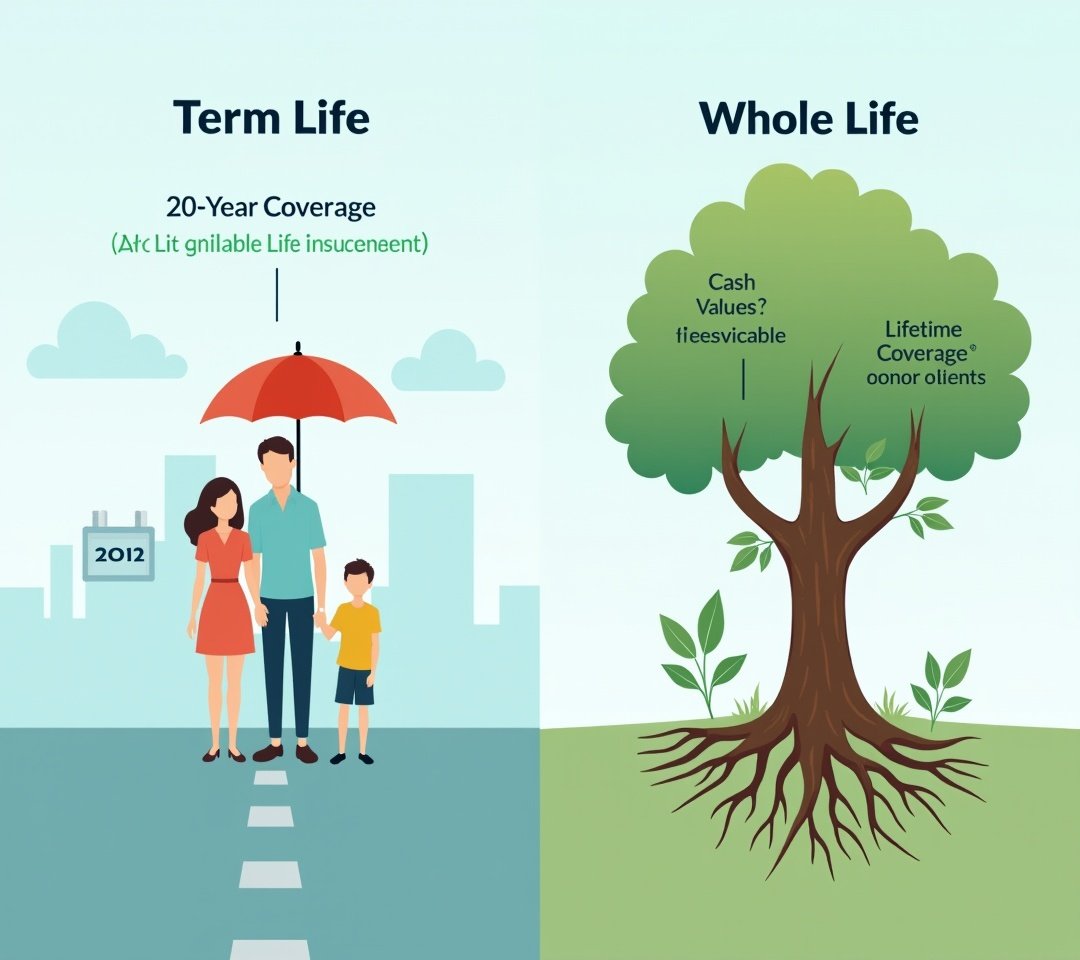
    Okay, so this is where things get interesting. Term life insurance covers you for a set period — say 10 or 20 years. It’s cheaper, but once the term ends, you’re done. Whole life insurance, on the other hand, covers you for your entire life and builds cash value over time.

    For seniors over 60, I generally lean toward whole life or guaranteed universal life policies. Here’s why — at this stage, you’re not really trying to replace 30 years of income anymore. You’re typically looking at:

    • Covering funeral and burial costs (which can easily run $8,000 to $15,000 these days)
    • Paying off remaining debts like a mortgage or medical bills
    • Leaving a small inheritance for loved ones
    • Supplementing your spouse’s retirement income

    That said, if you just need coverage for a specific window — like until your mortgage is paid off — a 10-year term policy could still work and save you some money. It really depends on your situation.

    The No-Exam Option That Saved My Dad a Headache

    My dad has high blood pressure and a history of type 2 diabetes. When he first looked into senior life insurance policies, he was dreading the medical exam. Like, genuinely anxious about it. Then we discovered guaranteed issue life insurance, and it was kind of a relief.

    With guaranteed issue policies, there’s no medical exam and no health questions. You’re basically accepted regardless of your health status. The catch? Coverage amounts are usually capped around $25,000, and there’s often a graded death benefit — meaning if you pass away within the first two or three years, your beneficiaries only get a partial payout.

    It’s not perfect. But for someone with serious health concerns who’s been turned down elsewhere, it can be a lifeline. We ended up going a different route for Dad, but knowing that option existed took a lot of stress off the table.

    Mistakes I’ve Seen Seniors Make (Including My Own Family)

    One big mistake? Waiting too long. Every year you delay after 60, premiums go up. My uncle kept saying “next year” until he was 68, and he ended up paying almost double what he would’ve at 61. Don’t be my uncle.

    Another common one is buying more coverage than you actually need. A $500,000 policy sounds nice, but do you really need it? Sometimes a $50,000 whole life policy covers everything — final expenses, a little cushion for your spouse, maybe a gift for the grandkids.

    Also, please compare quotes. I cannot stress this enough. Rates vary wildly between companies.

    It’s Never Too Late to Protect Your People

    Look, I get it — thinking about life insurance after 60 isn’t exactly a fun Saturday afternoon activity. But having that conversation and getting the right coverage in place? It’s one of the most loving things you can do for the people you’ll leave behind.

    Take your time, talk to an independent agent, and don’t let anyone pressure you into a policy that doesn’t fit. Your situation is unique, so your coverage should be too. And if you want to keep learning about how to make smarter insurance decisions, come hang out with us over at Coverage Crafters — we’ve got plenty more guides written for real people, not insurance robots.

  • How Much Life Insurance Do You Really Need?

    How Much Life Insurance Do You Really Need?

    How Much Life Insurance Do I Need? A Real Talk Guide for 2026

    Here’s a stat that honestly kept me up at night: according to LIMRA’s 2024 Insurance Barometer Study, about 42% of Americans say they don’t have enough life insurance. I was one of those people for way too long. And the worst part? I didn’t even realize it until my second kid was born and I sat down with a calculator one evening feeling absolutely terrified.

    Figuring out how much life insurance you need is one of those adulting tasks that feels overwhelming, but trust me — it doesn’t have to be. Let me walk you through what I learned the hard way so you can skip the panic attacks.

    The Quick-and-Dirty Rule of Thumb

    Most financial advisors will tell you to get a life insurance policy worth 10 to 15 times your annual income. So if you’re making $60,000 a year, you’re looking at somewhere between $600,000 and $900,000 in coverage. Simple enough, right?

    But here’s the thing — that rule is kind of like using a one-size-fits-all shirt. It works for some people, but it’s gonna be way too loose or way too tight for others. I used this formula initially, and it completely ignored my wife’s student loan debt and the fact that we were planning to send two kids to college someday.

    The DIME Method: A Smarter Approach

    When I actually sat down with a financial planner (should’ve done that years earlier, honestly), she introduced me to the DIME method. It stands for Debt, Income, Mortgage, and Education. Here’s how it breaks down:

    • Debt: Add up all your debts — credit cards, car loans, student loans, personal loans. Everything except your mortgage.
    • Income: Multiply your annual income by the number of years your family would need financial support. Most people use 10-20 years here.
    • Mortgage: Include the full remaining balance on your home loan so your family can stay in the house.
    • Education: Estimate future college costs for each kid. The College Board puts the average around $25,000-$55,000 per year depending on public vs. private.

    When I ran my own numbers through DIME, I realized I needed almost double what that simple “10x income” rule suggested. That was a wake-up call, for real.

    Factors That People Totally Forget About

    I made the mistake of not thinking about a few things when I first got my term life insurance policy. Funeral costs alone can run $8,000 to $15,000 these days — nobody wants to think about that, but somebody’s gotta pay for it. Also, if your spouse is a stay-at-home parent, you need to factor in the cost of childcare, cooking, cleaning, and all that invisible labor.

    Another thing that gets overlooked? Inflation. A policy that feels generous today might not stretch as far in 15 or 20 years. I’d also consider any aging parents you might need to support down the road, because that snuck up on me faster than I expected.

    Term vs. Whole Life: Does It Affect How Much You Need?

    Short answer — not really, but it affects what you’ll pay. Term life insurance is cheaper and covers you for a set period (usually 20 or 30 years), which is what most families need. Whole life insurance lasts forever and builds cash value, but it costs way more.

    I went with a 30-year term policy because by the time it expires, my kids will be grown and our mortgage should be paid off. Honestly, for most people in their 30s and 40s, term life is the move. Don’t let anyone pressure you into whole life unless your financial situation specifically calls for it.

    So What’s Your Number?

    Look, there’s no magic number that works for everybody. Your life insurance needs depend on your debts, your income, your family size, and your long-term financial goals. The biggest mistake I see people make — and the one I made myself — is just guessing and hoping for the best.

    Take an hour this weekend, grab a coffee, and actually run your numbers. Your future self (and your family) will thank you for it. And if you want to keep learning about protecting what matters most, check out more guides over at Coverage Crafters — we’ve got plenty of no-nonsense advice waiting for you.

  • Term Life vs. Whole Life Insurance: A Clear Comparison

    Term Life vs. Whole Life Insurance: A Clear Comparison

    Term Life vs Whole Life Insurance: What I Wish Someone Had Told Me Before I Signed That Policy

    Here’s a stat that honestly blew my mind — according to LIMRA’s 2024 Insurance Barometer Study, about 42% of Americans don’t have any life insurance at all. And of the ones who do? A huge chunk of them don’t really understand what they bought. I was one of those people for years, and let me tell you, it cost me.

    When I was 28, I walked into an insurance agent’s office thinking I’d be in and out in twenty minutes. I walked out with a whole life insurance policy that was eating $280 a month from my paycheck. Was it the right call? Spoiler alert — for my situation, absolutely not. So let’s break down the whole term life vs whole life insurance thing so you don’t make the same mistakes I did.

    What Even Is Term Life Insurance?

    Term life insurance is basically the “rental apartment” of life insurance. You pay premiums for a set period — usually 10, 20, or 30 years — and if you pass away during that term, your beneficiaries get the death benefit. Simple as that.

    The beauty of term life is that it’s cheap. Like, shockingly affordable. A healthy 30-year-old can snag a 20-year term policy with a $500,000 death benefit for somewhere around $25-$30 a month, according to Policygenius.

    But here’s the catch — once your term expires, you got nothing. No cash value, no payout, nada. It’s pure protection, and honestly, for most young families? That’s exactly what’s needed.

    So What’s Whole Life Insurance Then?

    Whole life insurance is the “buying a house” equivalent. It covers you for your entire lifetime, and part of your premium goes into a cash value component that grows over time. Sounds amazing on paper, right?

    Well, here’s where it gets tricky. Those premiums are significantly higher — sometimes 5 to 15 times more than a comparable term policy. That $280 a month I was paying? A term policy would’ve cost me maybe $35 for the same coverage amount. The cash value growth was also painfully slow in those early years.

    Now, I’m not saying whole life is a scam or anything. It has legitimate uses. Wealthy individuals use it for estate planning, and the guaranteed cash value can be a conservative savings vehicle. But for a 28-year-old teacher with student loans? It was overkill.

    The Moment I Realized I Picked Wrong

    About three years into my whole life policy, my buddy Dave — who’s a financial planner — came over for a barbecue. I casually mentioned my policy and he nearly choked on his burger. He pulled out his phone and showed me what I could’ve been doing instead.

    If I had bought term and invested the difference in a low-cost index fund, I would of been way further ahead financially. That’s the classic “buy term and invest the difference” strategy, and for most people in their 20s and 30s, it’s honestly the smarter move. I was so frustrated with myself that night.

    When Does Whole Life Actually Make Sense?

    Okay, so I don’t want to be completely one-sided here. Whole life insurance has its place, and here are some situations where it genuinely shines:

    • You’ve maxed out all other tax-advantaged retirement accounts and want another vehicle for tax-deferred growth
    • You have a special needs dependent who will require lifelong financial support
    • Estate planning purposes — especially if your estate might be subject to federal estate taxes
    • You want a guaranteed death benefit that never expires, no matter what
    • Business succession planning or key person insurance needs

    If none of those apply to you? Term life is probably your best bet. The National Association of Insurance Commissioners has some great resources for understanding your options too.

    Quick Comparison at a Glance

    Term life gives you affordable, temporary coverage — perfect for covering a mortgage, raising kids, or replacing income during your working years. Whole life gives you permanent coverage with cash value accumulation, but at a premium price. Most financial advisors will tell you that term is the right choice for roughly 80-90% of families.

    What I’d Tell My Younger Self

    Look, life insurance decisions are deeply personal. What worked terribly for me might be perfect for your situation, and that’s totally fine. The important thing is that you actually understand what you’re buying before signing anything.

    Do your homework, talk to a fee-only financial advisor (not just an insurance agent who earns commission), and think about where you’ll be in 10, 20, 30 years. Your future family will thank you for it. And hey, if you want more straight-talk guides like this one, come hang out with us at Coverage Crafters — we’ve got tons of articles breaking down insurance topics without all the confusing jargon!

  • Actual Cash Value vs. Replacement Cost: Know the Difference

    Actual Cash Value vs. Replacement Cost: Know the Difference

    Actual Cash Value vs Replacement Cost: What I Wish I Knew Before Filing My First Claim

    Here’s a stat that honestly still bugs me — nearly one in 15 insured homes files a claim each year, and a huge chunk of those homeowners are blindsided by how little they actually receive. I was one of them! Back in 2019, a nasty hailstorm wrecked my roof, and when the adjuster handed me a check, I literally thought there’d been a mistake. Turns out, I didn’t understand the difference between actual cash value and replacement cost — and it cost me thousands.

    So What Exactly Is Actual Cash Value?

    Actual cash value (ACV) is basically what your property is worth right now, not what you paid for it and not what it would cost to replace it. Think of it like selling a used car — nobody’s paying you sticker price. The insurance company takes the replacement cost and then subtracts depreciation.

    Depreciation is where things get kinda painful. It accounts for age, wear and tear, and the overall condition of whatever was damaged. So that five-year-old roof I mentioned? The insurer knocked off years of “useful life,” and my payout was way less than what I needed to actually fix it.

    ACV policies tend to have lower premiums, which is exactly why I had one. I was being cheap, honestly. But you really do get what you pay for with insurance coverage.

    And What About Replacement Cost?

    Replacement cost value (RCV) is the amount it would take to replace or repair your damaged property with something of similar kind and quality — without deducting for depreciation. That’s the key difference right there. No depreciation subtracted.

    So if that same roof gets destroyed, a replacement cost policy would cover the full expense of putting on a brand new roof, minus your deductible of course. It’s a much better deal when disaster strikes, even though the monthly premium is a bit higher.

    One thing that tripped me up though — with most RCV policies, the insurer initially pays you the actual cash value amount. Then, after you’ve completed the repairs and submitted receipts, they reimburse you the rest. I didn’t know that at first and it was a frustrating surprise, so keep that in mind.

    A Real-World Example That Makes It Click

    Let me break this down with numbers because that’s what finally made it click for me. Say your 10-year-old couch gets destroyed in a house fire. A comparable new couch costs $2,000.

    • Replacement cost policy: You’d get $2,000 (minus your deductible) to buy a new couch of similar quality.
    • Actual cash value policy: The insurer might determine that a 10-year-old couch has depreciated by 60%. So you’d get $800 minus your deductible. Good luck finding a decent couch with that.

    See the difference? It’s massive. And it applies to everything — your home inventory, your electronics, appliances, even the structure of your house itself.

    Which One Should You Actually Choose?

    Look, I’m not gonna tell you replacement cost is always the right call, but for most people it is. The premium difference between an ACV and RCV policy is usually not that dramatic, maybe 10-15% more depending on your insurer and where you live.

    If you’re on a super tight budget, an ACV policy is obviously better than no insurance at all. But if you can swing the slightly higher premium, replacement cost coverage gives you so much more peace of mind. Trust me on this one — I learned the hard way.

    Here’s a quick tip from my experience: call your insurance agent and specifically ask which type of coverage you have. You’d be surprised how many people don’t actually know. I sure didn’t until it was too late.

    One More Thing Before You Go

    Understanding the difference between actual cash value and replacement cost isn’t just insurance nerd stuff — it’s genuinely one of those things that can save you thousands of dollars when life throws something ugly your way. Take 20 minutes this week to review your homeowners or renters insurance policy. Ask questions. Make sure your coverage actually matches what you’d need to rebuild your life after a loss.

    And hey, if you found this helpful, there’s plenty more where it came from. Head over to the Coverage Crafters blog for more straightforward breakdowns on insurance topics that actually matter to real people. We keep it simple because this stuff shouldn’t be confusing.

  • How to Compare Home Insurance Quotes Effectively

    How to Compare Home Insurance Quotes Effectively

    How to Compare Home Insurance Quotes (Without Losing Your Mind)

    Here’s a stat that honestly blew me away — homeowners who compare at least three insurance quotes save an average of 20% on their premiums. Twenty percent! I learned this the hard way back in 2019 when I just renewed my policy without shopping around and ended up overpaying by nearly $600 that year. So yeah, learning how to compare home insurance quotes is one of those adulting skills nobody teaches you, but everybody needs.

    Let me walk you through what I’ve picked up over the years. Trust me, it’s not as painful as it sounds.

    First Things First — Know What You Actually Need

    Before you even start requesting quotes, you gotta figure out what coverage you actually need. This was my biggest mistake early on. I just grabbed the cheapest policy I could find and called it a day.

    Turns out, that “cheap” policy had a ridiculously high deductible and barely covered my personal belongings. I didn’t realize it until a pipe burst in my basement, and suddenly I was on the hook for way more than I expected.

    So sit down and think about your dwelling coverage amount, your personal property value, and your liability needs. The Insurance Information Institute has a great breakdown of standard homeowners policy coverages if you need a starting point. Knowing your numbers makes comparing quotes so much easier because you’re actually comparing apples to apples.

    Get at Least Three to Five Quotes

    I know, I know — it sounds tedious. But seriously, the price differences between insurers for the exact same coverage can be wild. We’re talking hundreds of dollars sometimes.

    You can get quotes directly from insurance company websites, through independent agents, or by using comparison tools like NerdWallet’s home insurance comparison page. I personally like mixing methods — I’ll grab a couple online quotes and then call a local independent agent who can shop multiple carriers at once. It feels like having someone do your homework for you, and honestly who doesn’t love that?

    Don’t Just Stare at the Premium — Read the Details

    This is where most people mess up. Myself included, back in the day. You see a lower monthly payment and your brain just goes “yes, that one!” But the premium is only part of the story.

    Here’s what you should actually be comparing across quotes:

    • Deductible amounts — A lower premium often means a higher deductible, which means more out-of-pocket if you file a claim.
    • Coverage limits — Make sure each quote offers similar dwelling and personal property coverage amounts.
    • Exclusions — Some policies don’t cover things like floods, earthquakes, or even dog bites. Read the fine print!
    • Additional living expenses coverage — If your home becomes uninhabitable, this pays for temporary housing.
    • Liability coverage limits — This protects you if someone gets injured on your property.

    I once nearly picked a policy that excluded water damage from sewer backup. Living in an older neighborhood with aging pipes, that would’ve been a disaster waiting to happen. Literally.

    Ask About Discounts — Seriously, Just Ask

    Here’s something that still surprises me. Many insurers offer discounts that they won’t mention unless you specifically ask about them. It’s kinda annoying, but it is what it is.

    Common home insurance discounts include bundling with auto insurance, having a security system, being claims-free for several years, or even being a new homebuyer. When I bundled my home and auto policies together, I saved about 15% on both. That was a good day.

    Also, don’t forget to check your insurer’s financial strength rating on AM Best. A cheap policy means nothing if the company can’t actually pay out claims when it matters.

    Review and Reassess Every Year

    One thing I wish someone had told me sooner — comparing home insurance quotes isn’t a one-and-done thing. Your home’s value changes, your belongings change, and insurance rates fluctuate constantly. I now set a reminder every year, about 30 days before my renewal date, to shop around again.

    It takes maybe an hour, and it’s saved me real money more than once.

    Your Next Move

    Look, comparing homeowners insurance quotes doesn’t have to be overwhelming. Start with knowing your coverage needs, grab multiple quotes, and dig into the details beyond just the price tag. Customize everything to your specific situation because no two homes or families are the same.

    And please, always be honest on your applications — misrepresenting information can get a claim denied when you need it most. If you found this helpful and want more tips on protecting your home and wallet, head over to the Coverage Crafters blog for more guides like this one. We’ve got you covered — pun absolutely intended!

  • State by State: Home Insurance Requirements Explained

    State by State: Home Insurance Requirements Explained

    Home Insurance Requirements by State: What I Wish I’d Known Before Moving

    Here’s a fun stat that blew my mind — roughly 12% of homeowners in the U.S. don’t carry any homeowners insurance at all. I used to be one of those people who just assumed the rules were the same everywhere. Boy, was I wrong.

    When I relocated from Texas to Florida back in 2019, I got a rude awakening about how different home insurance requirements by state actually are. My mortgage lender basically laughed at my old policy and told me I needed way more coverage. So let me save you from the same headache I went through.

    Is Home Insurance Legally Required?

    Okay, so this trips people up all the time. Technically, no state legally mandates that you carry homeowners insurance. There’s no law on the books saying you’ll get fined for not having a policy.

    But here’s the catch — if you have a mortgage, your lender absolutely requires it. And since most of us aren’t buying homes outright with cash, it’s basically mandatory for the vast majority of homeowners. If you skip it, your lender will buy a policy for you called “force-placed insurance,” and trust me, it’s way more expensive and covers way less.

    States Where Things Get Complicated

    This is where it gets interesting. Some states have additional insurance requirements that go beyond a standard homeowners policy, and they caught me completely off guard.

    Hurricane and Windstorm Prone States

    If you live in Florida, Texas, Louisiana, or along the Gulf Coast, you’ll likely need separate windstorm coverage. Standard home insurance policies in these areas often exclude wind damage entirely. I learned this the hard way when my Florida agent showed me what my base policy actually covered — spoiler, it wasn’t much.

    Florida homeowners often have to go through Citizens Property Insurance, the state’s insurer of last resort, if they can’t find coverage on the private market. It’s not ideal, but sometimes it’s your only option.

    Earthquake and Flood Zones

    California residents need to think seriously about earthquake insurance, which is sold separately through the California Earthquake Authority. Standard policies don’t cover earthquake damage in any state, actually.

    And flooding? That’s a whole other animal. No standard homeowners policy covers flood damage, regardless of what state you’re in. You’ll need a separate flood insurance policy, typically through FEMA’s National Flood Insurance Program. If your home sits in a high-risk flood zone, your mortgage lender will require it.

    State-by-State Coverage Minimums and Quirks

    While there aren’t official state-mandated minimums for homeowners insurance, lenders in different states have varying expectations. Here’s what I’ve noticed from my own experiences and from talking to insurance agents across different moves:

    • Texas: Lenders typically require coverage equal to at least the replacement cost of your home. Windstorm and hail coverage is often separate in coastal counties.
    • Florida: Many insurers require hurricane deductibles ranging from 2% to 5% of your dwelling coverage. That’s a percentage, not a flat dollar amount, which can sting.
    • California: Wildfire risk has made it increasingly difficult to even find coverage in certain zip codes. Some homeowners are being dropped by insurers left and right.
    • New York: Standard policies are generally sufficient, but co-op and condo owners need specialized HO-6 policies.
    • Oklahoma and Kansas: Tornado alley states where insurers often have higher deductibles for wind and hail damage.

    The differences are honestly wild once you start comparing them side by side.

    My Biggest Mistake (So You Don’t Repeat It)

    When I moved to Florida, I just assumed my insurance agent would automatically include everything I needed. He didn’t. I went almost three months without proper windstorm coverage and didn’t realize it until a neighbor mentioned her separate wind policy over coffee.

    My advice? Always ask your agent specifically what’s excluded from your policy. Don’t assume anything is covered just because it seems obvious. And get everything in writing — I cannot stress that enough.

    The Bottom Line for Protecting Your Home

    Understanding home insurance requirements by state isn’t just boring paperwork stuff — it’s genuinely important for protecting what’s probably your biggest investment. Every state has its own risks, its own quirks, and its own insurance landscape that you need to navigate carefully.

    Take some time to research what’s specific to your state and talk to a local independent agent who knows the area. Customize your coverage based on where you actually live, not where you used to live. And please, don’t skip flood or windstorm coverage just because it’s “optional.”

    If you found this helpful, check out more guides and tips over at Coverage Crafters — we break down insurance topics so they actually make sense. Your future self will thank you!

  • Home Insurance Riders: What Are They and Do You Need One?

    Home Insurance Riders: What Are They and Do You Need One?

    Home Insurance Riders Explained: What I Wish I Knew Before That Basement Flood

    Here’s a stat that still makes me cringe — nearly one in 20 insured homes files a claim each year, and a shocking number of those homeowners discover too late that their standard policy doesn’t cover what they thought it did. I learned this the hard way back in 2019 when my basement flooded and I found out water backup wasn’t included in my base homeowners insurance. That’s when I got real familiar with something called insurance riders, and honestly, it changed how I think about protecting my home entirely!

    So What Exactly Is a Home Insurance Rider?

    A home insurance rider — sometimes called an endorsement or a floater — is basically an add-on to your standard homeowners policy. Think of it like ordering a burger and then adding bacon and avocado. Your base policy is the burger, and riders are those extras that customize your coverage to fit your actual life.

    Standard homeowners insurance covers the basics like fire, theft, and certain types of weather damage. But there’s a ton of stuff that gets excluded or has really low coverage limits. That’s where riders come in, filling those gaps so you’re not left holding the bag when something unexpected happens.

    The Most Common Riders You Should Actually Know About

    After my basement disaster, I went down a rabbit hole researching every type of endorsement available. Here are the ones I think most homeowners should seriously consider:

    • Scheduled Personal Property Rider: This one covers high-value items like jewelry, art, or collectibles that exceed your policy’s standard limits. My wife’s engagement ring alone was worth more than the default jewelry cap on our policy — whoops.
    • Water Backup Coverage: This is the one that got me. Sewer and drain backup damage is almost never included in a standard policy. Adding this rider cost me about $50 a year. Fifty bucks! I still kick myself for not having it sooner.
    • Identity Theft Protection: Covers expenses related to restoring your identity if it’s stolen. It’s surprisingly affordable and something I never thought about until a coworker dealt with it.
    • Home Business Rider: If you work from home or run a side hustle, your standard policy probably won’t cover business equipment or liability. This rider was a game-changer when I started freelancing.
    • Earthquake and Flood Insurance: These are technically separate policies in many cases, but they function like riders in practice. If you’re in a risk zone, FEMA’s National Flood Insurance Program is worth looking into.

    How Much Do Riders Actually Cost?

    This is the part that surprised me the most. Most riders are way cheaper than people think. We’re talking anywhere from $20 to $100 per year for most endorsements, depending on your location and the coverage amount.

    Now, scheduled personal property riders for expensive stuff like a $10,000 watch collection will obviously cost more. But in general, the cost of adding a rider is a fraction of what you’d pay out of pocket if something went wrong. I remember my insurance agent telling me, “It’s not about what you pay — it’s about what you’d lose,” and that honestly stuck with me.

    How to Figure Out Which Riders You Need

    Here’s my advice, and it’s probably the most practical thing I can share. Sit down and do a home inventory. Seriously, walk through every room and write down anything valuable. There are even free home inventory tools that make it pretty painless.

    Once you know what you own, compare it against your current policy limits. Ask your agent specifically about exclusions — don’t just skim the declarations page like I used to. Also, consider your geographic risks. Living near a flood plain or in earthquake country? That changes everything.

    And don’t be afraid to shop around. Different insurers offer different riders at different price points, so getting multiple quotes is just smart.

    Don’t Wait Until It’s Too Late Like I Did

    Look, I get it — insurance stuff feels boring until it suddenly doesn’t. But taking an hour to review your policy and ask about additional coverage endorsements can literally save you thousands. Customize your policy to match your real life, not some generic template.

    If there’s one thing my flooded basement taught me, its that the best time to add a rider is before you need it. So pick up the phone, talk to your agent, and get those gaps covered. And while you’re at it, swing by the Coverage Crafters blog for more tips on making sure your home insurance actually works for you when it matters most!

  • Flood Insurance vs. Home Insurance: Key Differences

    Flood Insurance vs. Home Insurance: Key Differences

    Flood Insurance vs Home Insurance: What I Wish Someone Had Told Me Before Water Ruined My Basement

    Here’s a stat that still blows my mind — according to FEMA, just one inch of floodwater can cause up to $25,000 in damage to your home. One inch! And here’s the kicker: most standard homeowners insurance policies won’t cover a single penny of it.

    I learned this the hard way back in 2019 when a heavy rainstorm overwhelmed the drainage system in my neighborhood. Water crept into my basement, destroyed my furnace, and ruined about half of what we had stored down there. I called my insurance company feeling pretty confident I was covered. Spoiler alert: I was not.

    So let me walk you through everything I’ve learned since then about flood insurance vs home insurance, because honestly, the difference between these two could save you thousands of dollars and a whole lot of heartache.

    What Does Standard Homeowners Insurance Actually Cover?

    Your typical home insurance policy — the one most of us get when we buy a house — covers a lot of stuff. We’re talking fire, theft, vandalism, windstorm damage, and even liability if someone slips on your icy porch. It’s a solid safety net for everyday risks.

    But here’s where people get tripped up. Homeowners insurance generally covers water damage that comes from inside your home, like a burst pipe or an overflowing washing machine. The moment that water comes from outside — rising rivers, storm surge, heavy rainfall pooling around your foundation — that’s a whole different ballgame.

    Most standard policies from companies like State Farm or Allstate explicitly exclude flood damage. I remember reading through my policy after my basement disaster and finding the exclusion buried on like page 47. It was right there in black and white, and I had just never bothered to look.

    So What Exactly Is Flood Insurance?

    Flood insurance is a separate policy designed specifically to cover damage caused by flooding. In the U.S., most flood insurance policies are backed by the National Flood Insurance Program (NFIP), which is managed by FEMA. You can also find private flood insurance options these days, and honestly some of them offer better coverage.

    A standard NFIP policy covers up to $250,000 for building damage and $100,000 for personal property. That might sound like a lot, but if you’ve got a nicer home or expensive belongings, it can run out quick. Private insurers sometimes offer higher limits, which is worth looking into.

    One thing that really frustrated me when I finally bought flood coverage was the 30-day waiting period. You can’t just buy a policy when you see a hurricane on the weather map and expect to be covered tomorrow. Plan ahead, people. Trust me on this one.

    Key Differences You Need to Know

    Let me break down the main differences because this is where it really matters:

    • Cause of damage: Home insurance covers internal water damage, fire, theft, and liability. Flood insurance covers rising water from external sources like storms, overflowing rivers, and storm surge.
    • Who provides it: Home insurance comes from private companies. Flood insurance is often through the NFIP, though private options exist.
    • Cost: The average homeowners policy runs about $1,800 per year according to Bankrate. Flood insurance averages around $700-$800 annually through the NFIP, but it varies wildly based on your flood zone.
    • Required or optional: Your mortgage lender will require homeowners insurance. Flood insurance is only mandatory if you’re in a high-risk flood zone with a federally backed mortgage.

    Do You Actually Need Both?

    Short answer? Probably yes. About 25% of all flood claims come from areas considered low-to-moderate risk. So even if you don’t live next to a river, flooding can still happen to you. It happened to me in a neighborhood nobody would have called “flood-prone.”

    Having both policies means you’re covered whether your kitchen catches fire or a flash flood rolls through your street. Neither policy alone gives you complete protection, and that gap in coverage is exactly where financial disasters happen.

    Don’t Make the Same Mistake I Did

    Look, I get it — nobody wants to pay for another insurance policy. But after watching my neighbor go through the same thing last year without flood coverage, I can tell you that the cost of not having it is way worse. Review your policies today, check your FEMA flood map, and talk to your agent about what you’re actually protected against.

    Your home is probably your biggest investment. Protect it from every angle. And if you want more practical guides like this, head over to Coverage Crafters where we break down insurance topics so they actually make sense. No jargon, no fluff — just stuff you can actually use.

  • How Much Home Insurance Do You Actually Need?

    How Much Home Insurance Do You Actually Need?

    How Much Home Insurance Do I Need? A Real-World Guide to Getting It Right

    Here’s a stat that honestly kept me up at night — according to recent industry data, roughly two out of three homes in America are underinsured by an average of 27%. That’s wild, right? I found out the hard way that figuring out how much home insurance you need isn’t something you just guess at and hope for the best.

    A few years back, a bad storm tore some siding off my house and damaged the roof. I thought my homeowners policy had me covered, but turns out I’d been carrying way too little dwelling coverage since the day I signed the paperwork. That was a painful lesson, and it’s exactly why I want to walk you through this so you don’t make the same mistake.

    Start With Your Dwelling Coverage — It’s the Big One

    Okay, so the most important number in your entire home insurance policy is your dwelling coverage. This is the amount your insurer will pay to rebuild your house from the ground up if it’s completely destroyed. And here’s where people mess up — it’s not the same as your home’s market value.

    Your home’s market value includes the land, the neighborhood, the school district, all that stuff. Dwelling coverage is strictly about the replacement cost — meaning what it would actually cost to rebuild the structure with similar materials and quality. I’d recommend getting a replacement cost estimate, which your insurance agent can help with, or you can use online calculators to get a ballpark.

    When I finally got a proper estimate done, I realized I was underinsured by almost $80,000. That’s the kind of gap that can financially wreck a family.

    Don’t Forget About Your Personal Property

    So your house is covered, great. But what about all your stuff inside it? Most standard policies set personal property coverage at around 50% to 70% of your dwelling coverage amount. For a lot of folks, that’s actually enough.

    But here’s the thing — if you own expensive jewelry, art, electronics, or collectibles, you might need additional coverage called a rider or endorsement. I learned this when my buddy had a break-in and found out his guitar collection was barely covered under his basic policy. Honestly, just do a quick home inventory. Walk through every room with your phone and record what you’ve got. It’s tedious but it’s so worth it.

    Liability Coverage: The Part Everyone Ignores

    This one’s a sleeper. Liability coverage protects you if someone gets hurt on your property and decides to sue. Most policies come with $100,000 in liability, but honestly? That’s not nearly enough in today’s world.

    I bumped mine up to $300,000, and it barely changed my premium. If you have a pool, a trampoline, or even a dog that gets a little too friendly with the mail carrier, you should seriously consider going higher. Some people even get an umbrella policy for extra protection, which is something I’ve been looking into myself.

    Other Coverages You Should Think About

    Standard home insurance doesn’t cover everything, and this tripped me up big time. Floods? Not covered. Earthquakes? Nope. You’ll need separate policies for those.

    • Flood insurance — Even if you’re not in a high-risk zone, it’s worth considering. About 25% of flood claims come from low-risk areas.
    • Loss of use coverage — This pays for hotel stays and meals if your home becomes uninhabitable. Trust me, you want this.
    • Sewer backup coverage — A surprisingly common issue that most basic policies exclude.

    Each of these add-ons is usually pretty affordable, and they fill in the gaps that could otherwise leave you scrambling.

    How to Actually Calculate What You Need

    Alright, let me give you a simple framework that worked for me. First, get your replacement cost estimate for the dwelling. Then check if your personal property coverage feels adequate after doing that home inventory I mentioned. After that, evaluate your liability needs based on your assets and risk factors.

    Finally — and this is key — review your policy every single year. Construction costs change, you buy new things, maybe you renovate the kitchen. Your coverage should evolve with your life, not stay frozen in time from when you first bought the place.

    Get This Right and Sleep Better at Night

    Look, figuring out how much home insurance you need isn’t the most thrilling Saturday activity. But getting it wrong can cost you everything. Take the time to assess your dwelling coverage, inventory your belongings, boost that liability protection, and fill in the gaps with additional policies where needed.

    Every homeowner’s situation is different, so customize your coverage to fit your life — not someone else’s. And if you want more practical guides like this one, head over to Coverage Crafters where we break down insurance topics in plain English. You’ve got this!